Updated on: 2026-09-18
If you are shopping for wooden dining tables, you likely want more than a place to eat. You want a centerpiece that looks warm, feels sturdy, and works for real life—weeknight meals, holiday hosting, and everyday gatherings.
In this guide, you will learn how to choose the right size, wood finish, and table style so it matches your space and your lifestyle.
You will also find simple care tips that help protect the surface and keep your table looking its best over time.
Finally, you will see practical recommendations and a few common mistakes to avoid, so you can buy with confidence.
1. Wooden dining tables are more than furniture
2. Common challenges when buying a wooden dining table
3. Comparison: round, rectangular, and extendable options
4. How to choose the right wood finish and style
Wooden dining tables are more than furniture
When you choose wooden dining tables, you are choosing a lasting atmosphere. A good table anchors your dining area and makes daily routines feel more intentional. It sets the tone for family dinners, game nights, and coffee chats that stretch longer than planned.
Wood also brings natural warmth. Even in a modern home, the texture and grain patterns help soften hard lines. That visual comfort matters when you want your space to feel inviting rather than staged.
At Home & Sleep Outlet in Rowlett, TX, we help shoppers find furniture that fits real homes. If you are furnishing an open-plan space, pairing a dining room with a home office, or simply upgrading from an older setup, the right table can bring clarity to the whole room.
When a dining table becomes your home’s “default gathering spot”
Some furniture looks good in photos, but does not handle life. Wooden dining tables usually perform better in day-to-day use because they are designed to be part of your routine. Think about setting down homework, rolling out a board game, or holding seasonal decor for weeks at a time. The table is where those moments happen.

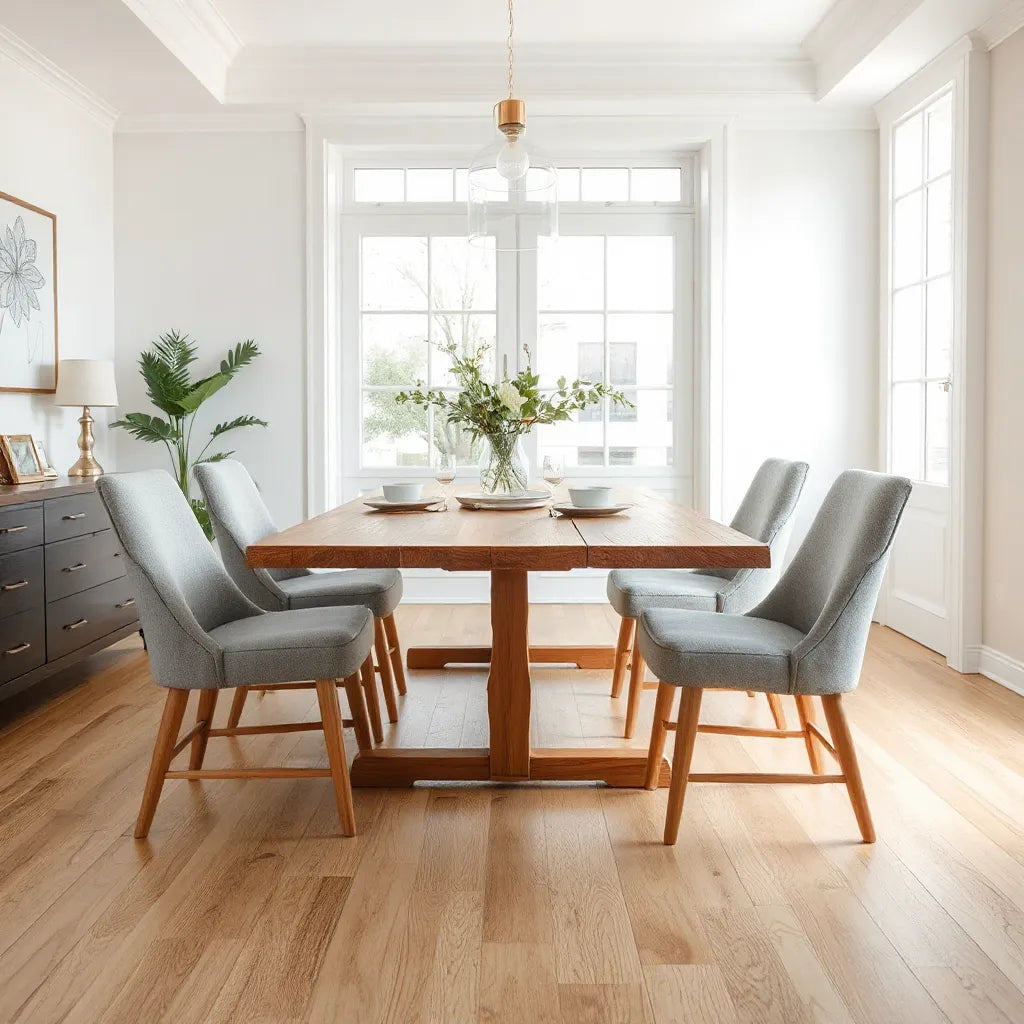
Warm wood grain, subtle light, shared meal silhouettes
Common challenges when buying a wooden dining table
Shopping can feel confusing because tables come in many shapes, sizes, and finishes. Below are the most common issues people run into—and how to solve them before you order.
Challenge 1: Choosing the wrong size for your room
A table can look “almost right” online and still feel cramped once it is in your space. Before you buy, measure your dining area and plan for walking room. Aim for comfortable clearance so chairs can slide in and out without constant squeezing.
- Measure the space where the table will sit, then measure doorways and walkway paths.
- Consider your chair style and whether you push chairs fully under the table.
- If you host often, plan for extra seating rather than forcing guests to crowd.
If you need help planning a full room layout, you can explore our broader catalog for complementary pieces that make the setup feel complete: Shop dining furniture.
Challenge 2: Worrying about maintenance and daily wear
It is normal to wonder how a wood surface holds up. You can protect your investment with simple habits. Use placemats for hot dishes, wipe spills promptly, and avoid harsh cleaners that can dull the finish.
- Use coasters for drinks to reduce ring marks.
- Clean gently with a soft cloth and a wood-safe cleaner when needed.
- Place a runner in the center if you serve meals often.
This approach keeps the table looking polished without overthinking it.
Challenge 3: Finding a style that matches your existing decor
Your dining area probably already has visual cues—floor tone, cabinet color, lighting style, and even the mood of your textiles. A table can either blend in or become the main statement.
Choose a finish that connects to what you already own. If your space has warm undertones, consider wood tones that reflect that warmth. If your home is cooler and more minimal, look for finishes with a cleaner grain look.
Challenge 4: Seating needs that change over time
Many households start with a small setup and grow into hosting. That is why the shape of your table matters. Round tables encourage easy conversation. Rectangular tables offer flexibility for long meal spreads and buffet-style service. Extendable tables let you adjust without replacing the entire piece.
Comparison: round, rectangular, and extendable options
Use this quick comparison to choose a wooden dining table shape that fits your routine.
- Round tables encourage conversation and work well in smaller spaces because there are no corners. They are great for everyday meals, casual breakfasts, and compact dining rooms.
- Rectangular tables are versatile and usually provide more surface length for serving. They fit well in formal dining rooms and open areas where you want a clear focal line.
- Extendable tables handle both daily life and special occasions. You can keep the base size comfortable and then open it up for guests.
Below is a simple pros-and-cons view.
Pros & cons at a glance
- Round: Pros—friendly seating flow, space-efficient. Cons—may reduce long-serving surface area.
- Rectangular: Pros—easy to arrange place settings, ideal for buffet setups. Cons—corners can feel tight in narrow rooms.
- Extendable: Pros—flexible seating, fewer replacement upgrades. Cons—requires space for extension and extra storage planning.

Three table silhouettes with arrows for seating flow
How to choose the right wood finish and style
Finish and style decide whether a table feels like a natural fit or an out-of-place detail. Start with the mood you want: warm and inviting, clean and modern, or timeless and traditional.
Pick a finish that matches your room’s undertones
Wood tones typically fall into a few directions. Warm tones often pair beautifully with beige, cream, and warm gray decor. Cooler tones can look crisp with white walls, darker accents, and streamlined furniture.
Look at your flooring and cabinetry first. When a dining table’s tone echoes the room, everything looks more intentional. When tones clash, the whole space can feel less cohesive—even if every piece is high quality.
Consider grain pattern and visual texture
Grain adds character, but too much contrast can overwhelm a busy room. If your dining space already has patterned chairs or bold wall art, choose a finish that feels balanced. If your decor is simple, a more expressive grain can create visual interest.
Choose a style for your daily routine
Your table style should match how you eat and gather.
- If your meals are casual, prioritize smooth surfaces and practical edges that feel comfortable to use.
- If you host often, focus on table length and easy chair spacing for guests.
- If you work from the dining area, consider a surface shape that supports laptop placement and quick cleanups.
Real-life product pairing ideas (for a coordinated room)
Many shoppers want a complete look, not just a single piece. While your dining table is the anchor, complementary items help everything feel finished. For example, pairing a dining setup with a wood-lined storage or bedroom furniture piece can create continuity across rooms. If you enjoy the look of vintage-inspired cherry tones, you might also like exploring other pieces from our collection, such as this dresser option: vintage cherry bureau.
Customer feedback highlights (what buyers often mention)
When customers choose wooden dining tables, they usually bring up a few themes: the table becomes the “center” of the room, the finish looks better over time, and the dining space feels more welcoming. Many also say they appreciate buying one key piece that ties together chairs, lighting, and decor.
Because every home is different, focus on how the table will fit your routine. A dining table is not just for holidays—it is for your ordinary days that deserve a beautiful setting.
Setup and care for long-lasting beauty
To keep your wooden dining table looking great, treat it like a centerpiece you protect. The right setup helps prevent scratches, heat marks, and dulling around high-use spots.
Step 1: Protect the surface from daily hazards
- Use coasters under drinks and placemats under daily meals.
- Slide chairs gently into place to avoid scraping.
- Place hot pots and pans on trivets, not directly on the finish.
Step 2: Clean with care, not harsh chemicals
Regular wiping removes crumbs and light spills before they build up. For routine cleaning, a soft cloth and wood-safe cleaner is usually enough. Avoid aggressive scrubbing, and do not let moisture sit on the surface.
Step 3: Maintain the look with simple habits
Even with daily care, wood can respond to indoor conditions. Keep your home at stable temperature and humidity when possible. If you live in a very dry or very humid climate, your table may benefit from occasional conditioning based on the finish type.
When in doubt, check the manufacturer guidance for your exact table finish and follow those recommendations for maintenance.
Common mistakes to avoid
- Skipping placemats during frequent meals and hosting.
- Using furniture polish too often without considering the finish.
- Dragging chairs across the surface during cleaning or rearranging.
- Placing it near heat vents or direct sun that can dry or fade finishes over time.
Summary & recommendations
Wooden dining tables are a smart upgrade because they combine everyday function with lasting style. When you choose the right size, match the finish to your room, and set the table up with protective habits, you get a centerpiece that supports real life—not just special occasions.
If you are deciding between round, rectangular, and extendable shapes, think about how you host and how your space flows. Round options bring conversation close. Rectangular designs deliver practical length for serving. Extendable tables adapt as your household grows.
For a confident purchase experience, shop with your measurements ready and your maintenance comfort in mind. If you want to explore more furniture ideas and build a cohesive room, start here: Home & Sleep Outlet furniture selection. And if you want a quick, style-adjacent read for coordinating lighting with your dining area, you may also enjoy this guide: Stained Glass Chandelier Guide: Styles, Sizing, Care.
Disclaimer: Product details, availability, and finishes can vary by model and supplier. Always review the specific product listing for measurements, care instructions, and warranty information before purchase.
Q&A
How do I measure for wooden dining tables without guessing?
Start by measuring the width and length of the area where the table will sit. Then measure space for chair movement by allowing clearance around the perimeter. If you already own dining chairs, account for their footprint when pulled out. If you plan to host, consider a slightly larger option or choose an extendable table to add seating when needed.
What is the easiest way to protect a wood dining surface every day?
Use coasters and placemats. Keep hot items on trivets, and wipe spills soon after they happen. For cleaning, stick to a soft cloth and wood-safe products. Gentle, consistent care helps the finish stay smooth and reduces the risk of visible wear over time.
Are round or rectangular wooden dining tables better for small spaces?
Round tables are often a strong choice for smaller rooms because they remove corners and make movement feel smoother. Rectangular tables work well too if you have enough width for comfortable chair spacing. The best option depends on your room layout, chair style, and how you want guests to move around the table during meals.

I like making people happy