Updated on: 2026-09-02
Choosing dining room furniture is about more than filling space. The right pieces help you host comfortably, move easily through the room, and create a look that feels finished. When your table, chairs, and storage work together, everyday meals become more enjoyable and your home feels more put-together. This guide walks you through practical selection tips, helpful layout ideas, and room-ready styling strategies.
Table of Contents
- How to Choose Dining Room Furniture
- Layout and Measurements That Prevent Crowding
- Matching Styles and Finishes for a Cohesive Look
- Storage That Elevates Every Meal
- Care and Longevity Tips for Daily Use
- Real Home Use Cases
- FAQ
How to Choose Dining Room Furniture
The best dining room furniture fits your routines first. Think about how you use the space: quick breakfasts, family dinners, holiday hosting, or a mix of everything. Start with the centerpiece—the dining table—and build outward from there. When your foundation matches your needs, every added piece feels intentional rather than random.
1) Select a dining table size for real movement
Dining rooms feel “right” when people can sit down and stand up without bumping elbows or dragging chairs. Aim for enough open space around the table so guests can pass comfortably. If you often host, consider a table that can expand or one with a shape that supports conversation.
2) Choose chair comfort that supports long conversations
Chairs should be supportive without requiring constant readjustment. Look for chair backs that feel balanced with your table height and seat width that leaves a little breathing room. If your dining style includes lingering dinners, prioritize comfort details like well-proportioned seating and stable construction.
3) Pick storage that matches your dining rhythm
Sideboards, buffets, and dressers help you keep serving items and everyday essentials close at hand. When storage is thoughtfully placed, you spend less time hunting for napkins or extra place settings. It also keeps the room visually calm.
4) Match lighting and table scale
Your lighting should work with the table’s footprint. A chandelier or pendant that’s too small can look disconnected, while one that’s too large can feel heavy. Choose a scale that frames the table and supports an inviting glow during meals.

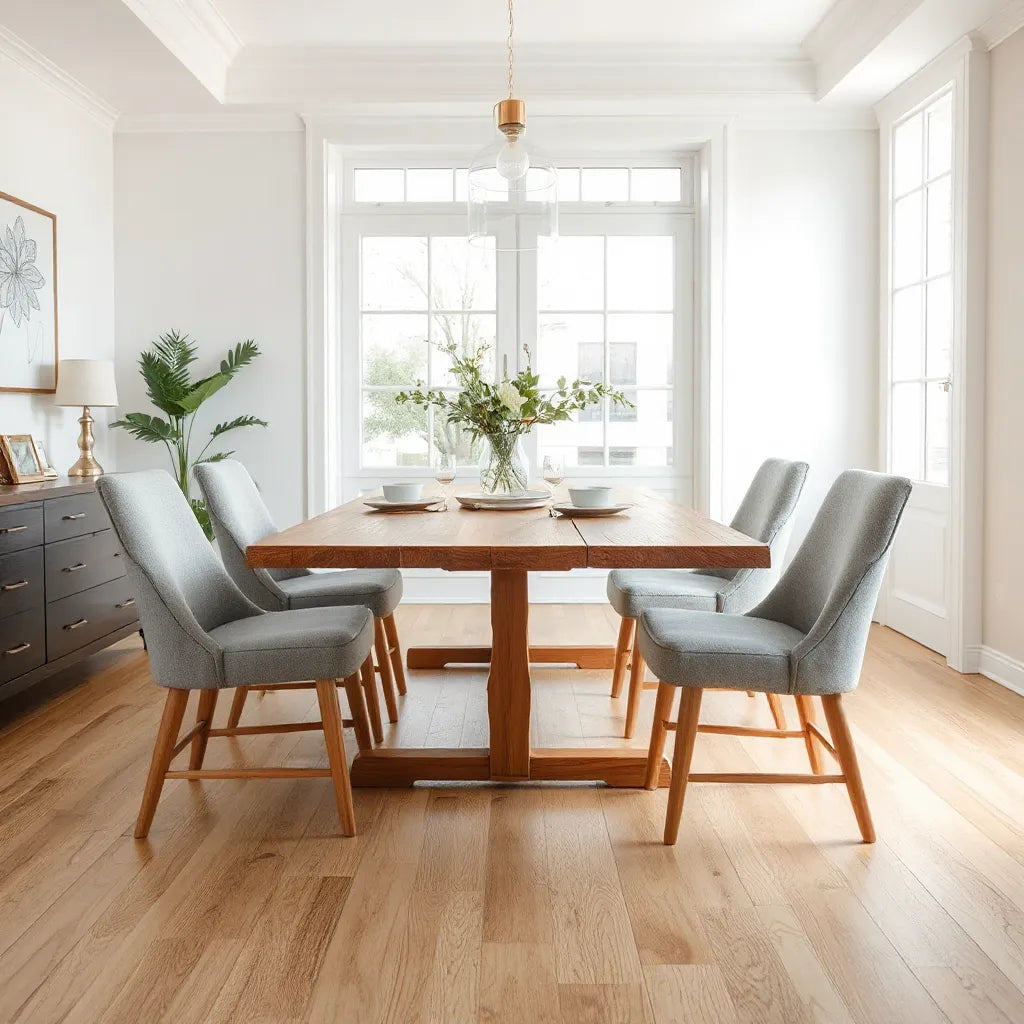
Balanced room layout with open walking paths
Layout and Measurements That Prevent Crowding
Even the most beautiful dining room furniture can feel awkward if the layout fights your daily flow. A few measurements go a long way toward comfort. Before you buy, map where doors open, where walkways should remain clear, and how people will move between kitchen and dining.
Keep clearances consistent
When chairs are pulled out, you still need safe space to walk. Use a simple approach: measure your dining table footprint and add extra room on each side based on the chair type. If you have a bench, plan for its extra sweep area. Clearances protect you from the “always scooting chairs back” problem.
Use shapes strategically
Round tables encourage conversation and can reduce dead zones. Rectangular tables can better fit long rooms and formal hosting setups. If your space is narrow, a shape that reduces wasted corners helps keep the room balanced.
Plan for serving access
Think about where guests and hosts will place serving platters. If your buffet or sideboard sits close to the table, you can serve with less reaching. Make sure drawers and doors can open smoothly without hitting chair legs.
Create a visual anchor
A cohesive anchor helps the room feel designed. Many homeowners use a matching set of dining chairs and a complementary storage piece. The result: your eye knows where to rest, and the dining area feels purposeful.
Matching Styles and Finishes for a Cohesive Look
When dining room furniture shares a consistent style language, the space looks more expensive and more relaxing. You do not need every piece to match exactly. You do need harmony in tone, finish, and proportions.
Choose one dominant style
Decide whether your dining room leans modern, transitional, traditional, or farmhouse. Then select table and chair shapes that reflect that direction. If your style is transitional, for example, you can blend classic and clean lines without the room feeling confused.
Coordinate finishes without “over-matching”
Many dining rooms look best when wood tones relate. If you choose a warm wood table, pick chairs and storage with similar warmth. If you like darker finishes, keep other surfaces—like cabinet hardware—balanced so the room feels stable rather than busy.
Unify details across pieces
Details are the secret weapon: the same feel of legs, the same color family in upholstery, and consistent hardware styling. These small signals keep the room cohesive, even when you vary shapes.
Let texture soften the look
Textiles add comfort and depth. Consider seat cushions, upholstered chairs, or a runner that echoes your finish tones. Texture helps the dining area feel welcoming for everyday meals and special occasions.
Storage That Elevates Every Meal
Dining room furniture becomes more functional when storage supports your routine. A clutter-free surface makes it easier to host, and it gives your room a calm visual flow. The goal is simple: keep what you need close, and store what you do not need out of sight.
Sideboards and buffets for serving + display
A sideboard provides a home for serving trays, platters, extra utensils, and linens. Many people also use the top surface to style seasonal decor, framed photos, or a small centerpiece. This creates a dining room that looks ready, even on busy days.
Dressers and chests for overflow essentials
If you need more space for dining essentials, consider a dresser-style storage option. It can hold tablecloths, napkins, and bulky items that do not fit in smaller cabinets. When storage is sized correctly, your dining room stays tidy without feeling limited.
Mirrors and room-brightening accents
A mirror near your dining zone can improve light and make the space feel larger. It also helps the room feel polished. When you coordinate the frame tone with your dining table, the effect looks intentional rather than random.

Open storage concept with neatly arranged dining items
Care and Longevity Tips for Daily Use
Dining room furniture earns its place through daily use. With the right care, your investment stays beautiful and comfortable. The best approach is simple: protect surfaces, clean gently, and avoid habits that wear finishes over time.
Use simple protective routines
Coasters and placemats help protect tabletops from everyday moisture and heat. Felt pads or glides can reduce friction when chairs move across the floor. Small habits keep wear from becoming permanent.
Clean in a way that preserves finishes
Use a soft cloth and a gentle cleaner recommended for the material type. Avoid harsh scrubbing that can dull surfaces or damage protective topcoats. Regular light cleaning is more effective than occasional deep cleaning.
Keep hardware and hinges aligned
For storage pieces with drawers and doors, keep an eye on how smoothly they open. If you notice friction, address it early. Maintaining alignment helps doors close smoothly and reduces stress on the structure.
Handle chairs and seating with care
Lift chairs when possible rather than dragging them. For upholstered elements, vacuum with a soft attachment and address spills quickly. Comfortable seating stays inviting when it looks and feels fresh.
Real Home Use Cases
Dining rooms serve many roles, from family dinners to holiday gatherings to casual weekend meals. Here are practical ways homeowners use dining room furniture to solve common problems.
Family dinners in a busy household
If your schedule is packed, you want a dining setup that makes the day easier. Choose a table that fits your everyday number of diners and add storage that holds daily essentials. A nearby sideboard can keep napkins, serving utensils, and easy-to-reach items ready.
Hosting without stress
When guests come over, you should spend time with people, not scrambling for space. A well-planned layout gives you room for guests to move. Storage that holds extra place settings keeps the dining area functional. Consider furniture with proportions that match your room size so the space never feels overcrowded.
A dedicated dining zone in an open-plan home
In open-plan layouts, dining furniture can define the zone. A matching dining table and chair set creates visual structure. Add a storage piece with matching finish tones to anchor the area. The result is a dining zone that feels distinct even when your living space is connected.
Style upgrades that still feel practical
You do not have to choose between beauty and function. Many dining room furniture collections include chairs, tables, and storage designed to coordinate. When the style lines up, upgrading becomes easier. Your room gets a cohesive look that still supports daily use.
If you want to build a room that looks coordinated, explore complementary furniture options at Home & Sleep Outlet. Our team in Rowlett, TX helps customers compare styles, sizes, and finishes so your dining area feels right from day one.
For example, if you are creating a warm, classic dining look, these storage and accent pieces can pair well with a traditional or transitional table and chair setup:
- 7-Drawer Bureau in Vintage Cherry for dining essentials and extra storage
- Dresser with Mirror Set to brighten and polish the dining zone
- Night Stand in Vintage Cherry for a practical side surface near the dining space
- Sleigh Bed in Vintage Cherry if you are coordinating finishes across rooms
How to Shop with Confidence
Shopping for dining room furniture feels easier when you know what to check. Focus on comfort, proportions, and how pieces interact. When you keep your measurements close and think about your daily routine, you avoid the common mistakes that lead to returns or mismatched setups.
Start with your “must fit” requirements
- How many people you seat most often
- The space you can comfortably walk around
- Where you need storage for linens and serving items
Then build a matching set
Once the foundation pieces are selected, add complementary furniture that shares finish tones and style details. The room will look intentional, and daily use will feel natural.
Ask for help if your layout is complex
If your room is long, narrow, or open to another area, professional guidance can help. At Home & Sleep Outlet, you can get help comparing options for your space. That way, you choose dining room furniture that looks great and works beautifully in everyday life.
FAQ
What is the best way to measure for dining room furniture?
Measure your dining area first, then plan for chair movement. Include the space needed for chairs to pull out comfortably. Also check where doors open and how people walk between the kitchen and dining zone. If you want a storage piece near the table, measure for door and drawer clearance too.
How do I choose between a square, rectangle, or round dining table?
Use your room shape and your hosting style. Rectangular tables fit well in longer rooms and support serving needs. Round tables encourage conversation and can feel more flexible in smaller spaces. Square tables can work nicely when the room is compact and you want a defined centerpiece.
How can I make dining room furniture look cohesive without buying a full matching set?
Coordinate finishes and repeated design cues. Pick a dominant style direction, then match tone through wood colors or complementary hardware details. Add texture with upholstery or a runner to soften the look. When the shapes and finish families relate, the dining room feels unified even with mixed pieces.
Where should dining storage be placed for easy serving?
Place storage close enough to the table for convenient serving, but far enough to keep clear walkways. A sideboard or buffet next to the seating area often works best because you can access linens and serving tools quickly without crossing behind guests.
Disclaimer: This article provides general shopping and layout guidance. Actual fit and visual results depend on your room measurements, the size of the items you choose, and your preferred layout. For the best outcome, measure your space and confirm dimensions before purchasing.

I like making people happy